Trip planning
Ayutthaya Itineraries: Best Day Trips, Tours & 2-Day Routes
Choose a ready made Ayutthaya itinerary that fits your time. This page gathers half day, one day, two day, family friendly and photography focused routes that cover the main temples, palaces and museums.
Each itinerary is designed around cooler times of day and sensible routing so you can spend more time exploring and less time backtracking. Use it to plan an easy day trip from Bangkok or a relaxed overnight stay.
Quick itinerary picker
Short on time. Choose the half day loop. One full day covers the biggest highlights. Two days let you mix central ruins, river trips and quieter temples on the edge of town.
How to use these Ayutthaya itineraries
Ayutthaya is compact enough to see the main island temples in a single day, yet rich enough to reward slower trips. The itineraries on this page are built from the key sights in the main temples and history guide, arranged in practical loops.
Start by choosing how long you have. Half a day is enough for a highlight loop of the most famous ruins. One day adds a museum and sunset by the river. Two days give you time for quieter outer temples, palace museums and foreign settlements along the riverbanks.
Planning tip: decide on one main cluster for morning, one for late afternoon and at least one indoor stop for the hottest hours. You can then add nearby shrines and markets as optional extras depending on energy and weather.
All itineraries are flexible. You can follow them exactly or mix and match stops to build your own custom Ayutthaya route. Times are approximate and based on typical opening hours and an easy pace. All itinaries are recommended by experienced local Ayutthaya Tour Guides.
Practical tips for every itinerary
Half day Ayutthaya itinerary (3–5 Hours, Highlights Only)
This route is designed for visitors who have only a morning or afternoon on the island. It focuses on the most recognisable ruins and sacred images within a short distance of one another. Arrange a tuk tuk, bike or taxi so you can move quickly between stops.
Best time: 8:00 to 12:00
Good for: first time visitors
Route summary: Wat Mahathat, Wat Ratchaburana, Wat Phra Si Sanphet with Mongkhon Bophit, then Wat Lokayasutharam before lunch or departure.
Start as early as you can for cooler air and softer light. This half day Ayutthaya itinerary brings you through the three most iconic temple zones and finishes at a giant reclining Buddha that is easy to reach and quick to visit.
Wat Mahathat
Suggested time: 8:00 to 9:00
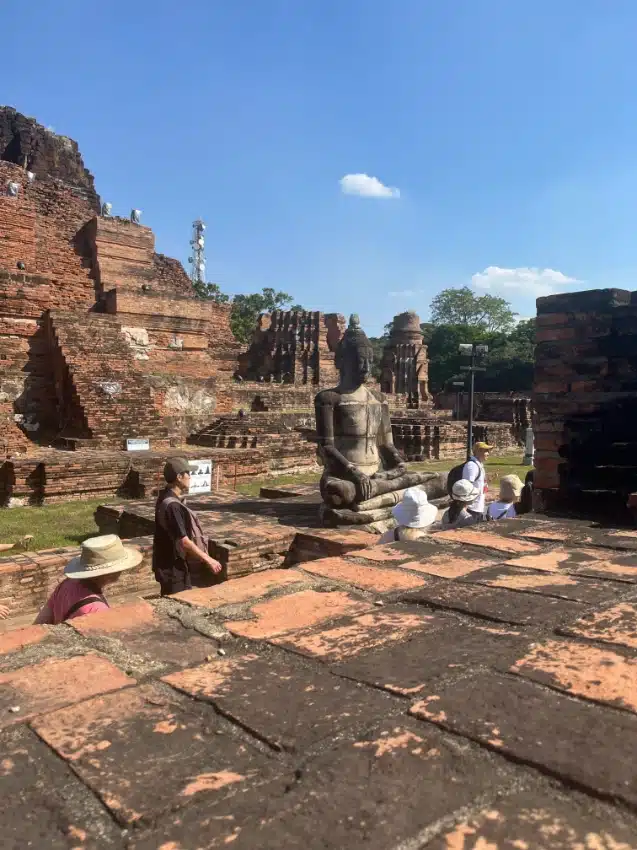
Arrive at Wat Mahathat around 8:00. Walk directly toward the famous Buddha head wrapped in banyan roots before the main tour buses arrive. Then loop through the surrounding prangs and headless Buddha rows to feel how large the royal monastery once was. Always Respect the Buddha head by kneeling for close photos and never touching the roots.
Wat Ratchaburana
Suggested time: 9:00 to 9:45
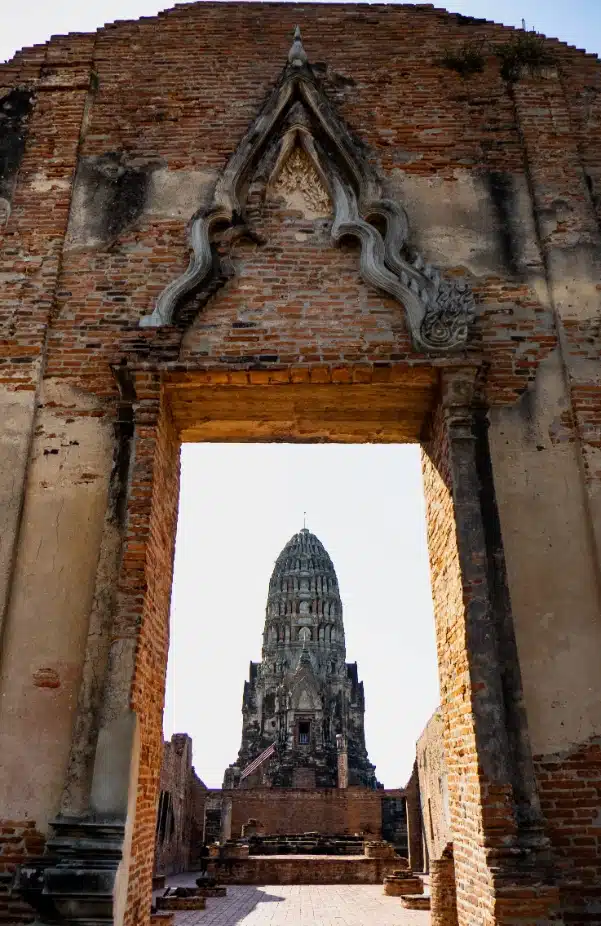
Cross to Wat Ratchaburana and explore one of Ayutthaya first intact central towers. If the crypt is open, descend carefully to see faded mural fragments and picture the gold relics that were once buried here (now displayed in a museum). This temple, founded by a 15th-century king, offers insight into Ayutthaya’s history, legend says thieves looted its crypt, incurring swift karmic misfortune. The airy grounds are usually quiet in the morning, so you can explore and take photos uninterrupted.
Wat Phra Si Sanphet & Mongkhon Bophit
Suggested time: 10:00 to 11:00
Next, head to the old Royal Palace area to see Wat Phra Si Sanphet’s three great chedis, iconic bell-shaped stupas that are symbols of Ayutthaya. These three restored pagodas, rising from a platform amid ruins, housed the ashes of Ayutthayan kings. Adjacent is Wihan Phra Mongkhon Bophit, a hall enshrining a huge bronze Buddha. Take a moment inside to admire one of the largest Buddha images in Thailand, which has been re-gilded and revered for centuries. This stop offers a striking contrast: the open ruins of a royal temple next to an active shrine where locals pray.
Wat Lokayasutharam
Suggested time: 11:00 to 11:30
Conclude your half-day with a short ride to Wat Lokayasutharam, an open-air site home to a giant reclining Buddha statue. This 37-meter long Buddha, covered in weather-worn stucco, lies on its side in the grass, head resting on a lotus – a scene both serene and impressive for a quick visit. Children and adults alike marvel at its scale. The statue is draped in orange cloth, and you may spot worshippers applying gold leaf to a small model of the Buddha in front. It’s a photogenic final stop and requires only a brief visit. By now it’s around noon – time to wrap up, hydrate, and depart Ayutthaya (or grab lunch if you’re continuing your day).
Who this suits: Traveler’s on a tight schedule who still want classic Ayutthaya photos and a sense of the old capital.
Half day Ayutthaya itinerary Google Map
Ayutthaya 1 Day itinerary with main highlights
With one full day you can combine an active temple morning, a museum during the hottest hours and a riverside sunset. This route works well for Bangkok day trips or guests staying one night in Ayutthaya.
Best time: 8:00 to sunset
Good for: first visit, general interest
Route summary: Wat Yai Chai Mongkhon, Wat Phanan Choeng, Wat Mahathat, Wat Phra Si Sanphet with palace ruins, Chao Sam Phraya National Museum, then sunset at Wat Chaiwatthanaram.
This one day Ayutthaya itinerary mixes living monasteries and ruined temples with time in a museum for context. Morning is dedicated to active temples outside the island, midday covers the most important royal ruins, and late afternoon finishes at the most photogenic sunset spot.
Wat Yai Chai Mongkhon
Suggested time: 8:00 to 9:15
Start just outside the city island at this large monastery whose name means “Great Monastery of Victory.” Climb the 62-meter bell-shaped chedi built by King Naresuan, a steep but worthwhile ascent for views over the temple grounds. Around the chedi you’ll see dozens of stone Buddha statues in saffron robes, creating a peaceful symmetry. Don’t miss the big reclining Buddha in the courtyard, often draped in yellow cloth. Wat Yai Chai Mongkhon is an active temple (monks and devotees visit early), so it offers a mix of ruin exploration and living culture. Its expansive gardens make it a refreshing morning stop.
Wat Phanan Choeng
Suggested time: 9:30 to 10:30
A short drive away, this riverside temple predates the founding of Ayutthaya (built in 1324) and houses a legendary 19-meter seated Buddha image. Step into the main hall and look up – the gilded Buddha nearly touches the ceiling. It’s a breathtaking sight and a sacred one: locals constantly stream in to pay respects, especially in the morning. You might witness volunteers ritually draping massive orange cloths over the Buddha. In an adjacent shrine, see the Chinese influence in statues and incense – a nod to Ayutthaya’s historic Chinese community. Wat Phanan Choeng opens early and provides an intimate glimpse of devotional life, balancing the ruin-hopping with a dose of living tradition.
Wat Phra Mahathat
Suggested time: 11:00 to 11:45
Now head onto Ayutthaya’s island and dive into the historical park. Wat Mahathat, once the royal ceremonial temple, is a must-visit for its famous Buddha head in the banyan tree roots. Stroll among the roofless brick sanctuaries and weathered prangs; imagine the grandeur here before it was ransacked in 1767. This temple was the heart of the early Ayutthaya Kingdom, and although much is in ruins, it remains evocative. Tip: approach the Buddha head respectfully (kneel if taking photos close up), a security guard watches to ensure no one stands over it. By late morning, tour groups may be here, but the site is spacious enough to explore different corners and find quiet angles for photography.
Ancient Palace & Wat Phra Si Sanphet
Suggested time: 12:00 to 13:00
A few minutes away, enter the grounds of the old Royal Palace and Wat Phra Si Sanphet. This area was the nucleus of Ayutthaya’s royal court. While the wooden palace buildings are long gone, the royal temple Wat Phra Si Sanphet remains partially restored. Its three iconic stupas in a row are the postcard image of Ayutthaya, up close you can see their layered bases and niches. This temple once housed a 16-meter golden Buddha that was tragically looted and melted down during the fall of Ayutthaya. Today, it’s a photogenic ruin to wander. Next to it is Mongkhon Bophit Hall, where you can pop in to see a huge seated Buddha that survived the city’s destruction. This complex can be hot by midday, so take your time and find shade under trees between photo ops. You’ve now covered Ayutthaya’s “big three” temple, a perfect time to pause for lunch and a rest.
Chao Sam Phraya National Museum
Suggested time: 14:00 to 15:30
After a lunch break, escape the afternoon heat in Ayutthaya’s premier museum. This air-conditioned museum (named after a king) showcases treasures excavated from the very ruins you visited. Highlights include golden relics from Wat Ratchaburana’s crypt (royal ornaments, Buddha images, and votive tablets) and a remarkable display of golden artifacts in the dedicated Ayutthaya Gold Room. Seeing these items, like filigree headdresses and relic containers, brings context to the temples’ history. The museum also has ancient Buddha statues, ceramics, and dioramas of Ayutthaya’s old capital. Spend an hour here to enrich your understanding (and enjoy a cool, crowd-free environment). It’s open until late afternoon and is conveniently located in the city center.
Wat Chaiwatthanaram
Suggested time: 17:00 to 18:30
End your day with a short trip across the river to Ayutthaya’s most stunning sunset spot. Wat Chaiwatthanaram is a 17th-century temple on the Chao Phraya’s west bank, designed as a grand representation of the universe in Khmer-style architecture. Arrive by late afternoon when the light turns golden, the array of prangs and chedis will glow warmly in the low sun. Climb the steps onto the central platform to stand among the eight smaller chedis, and walk the perimeter galleries where weathered Buddha images once sat. As the sun dips, the entire complex is bathed in a magical light, with the river flowing peacefully nearby. It’s said that Wat Chaiwatthanaram “looks stunning at sunset” , and you’ll soon agree. Plan to spend at least an hour for photos and contemplation. (The site typically closes around 6 PM; staff may ring a bell when it’s time to leave.) Watching twilight descend on Ayutthaya’s ruins is a fitting finale to your day.
Who this suits: Traveler’s who want a balanced mix of ruins, living temples, a museum and a classic sunset photo in one day.
Full Day Itinerary Google Map
Two day Ayutthaya itinerary for in depth exploration
With two full days you can slow down on the main island, add a scenic river journey and explore outer temples and foreign settlements that most visitors skip. This route works well for guests staying one or two nights in Ayutthaya.
Best timing: arrive early on day one
Area: river routes, island core, outskirts
Good for: culture fans, repeat visitors
Day 1 – City Highlights and History Museum
Ayutthaya Boat Trip from Bangkok
Best time: Morning
Begin with a boat trip to Ayutthaya or, if you are already in town, a short morning cruise around the island. Passing riverfront temples and communities sets the scene for how Ayutthaya grew as a trading capital. Some routes also include a stop at Bang Pa In Royal Palace, featuring enjoyable cable cars, which can be a particular highlight for families with children.
Chao Sam Phraya National Museum
Best time: Early afternoon
Spend the first hot hours indoors at Chao Sam Phraya Museum. Focus on the gold treasures from Ratchaburana, royal ornaments, Buddha images and everyday objects. This gives context to the ruins you will see later.
Wat Mahathat and Wat Ratchaburana
Best time: Mid afternoon
Visit Wat Mahathat for the Buddha head in tree roots and central prang base, then cross to Wat Ratchaburana for its intact prang and crypt. Having just seen the museum exhibits, you can now imagine the treasures that once lay beneath your feet.
Wat Chaiwatthanaram at sunset
Best time: Sunset
End your first day across the river at Wat Chaiwatthanaram. Arrive around 17:00, explore the outer galleries and central terrace, then settle on the west side for sunset views. If you have already visited, consider a sunset boat ride that circles the island and passes illuminated temples.
Day 2 – Beyond the Island: Palaces and Outer Temples
Wat Mahathat & Wat Ratchaburana
Best time: Morning
Ease into Day 1 amid the central ruin zone. Start at Wat Mahathat around 8 AM to see the famous Buddha head in tree roots before crowds arrive. In the soft morning light, explore the grounds and imagine the ceremonies that once took place here. Then walk over to Wat Ratchaburana, where you can descend into the crypt (if open) and view its carved murals. These two temples are adjacent and complement each other – Mahathat gives you the iconic photo op and spiritual center of old Ayutthaya, while Ratchaburana offers an adventurous peek into archaeological treasures (its Buddha relics and gold were unearthed and are now in the museum you’ll visit later). Both sites typically open by 8 AM.
Wat Phra Si Sanphet & Royal Palace
Best time: Late Morning
Next, head to the former Royal Palace and Wat Phra Si Sanphet, the spiritual heart of the Ayutthaya Kingdom. Take your time walking among the trio of massive stupas and the scattered foundations of halls. By splitting this over two days, you can visit at a quieter hour (late morning often sees fewer tour groups than mid-afternoon). Imagine the ceremonies once held here when it was a royal chapel. Afterwards, peek into Wihan Phra Mongkhon Bophit next door to see the giant bronze Buddha statue – an active worship site that provides shade and a quick rest. Before lunch, you could also wander the open field of the Ancient Palace ruins behind Wat Phra Si Sanphet – mainly brick foundations now, but historically where kings lived. It’s an open space that gives context to the temple. Around 12–1 PM, break for lunch at a nearby eatery or the market.
Lunch Break in Town
Best time: Midday
Day 2 is a good chance to try a local lunch, perhaps at a riverside restaurant or a market in Ayutthaya. (Families might enjoy the floating market if it’s open, for a bit of fun – though it’s a commercial tourist spot, it can be entertaining for kids.) No specific site here, but allocate time to relax and recharge after the palace excursion and temple visits.
Wat Na Phra Men
Best time: Early Afternoon
After lunch, cross to the north bank of the island to visit Wat Na Phra Men (Wat Na Phra Meru). This temple is unique because it survived Ayutthaya’s destruction intact. Inside its viharn (chapel), you’ll find a splendid Buddha statue in royal attire – a rare crowned Buddha image from the late Ayutthaya period. The interior is cool and quiet, with beautifully carved wooden gables and pillars. Since it’s an active temple, you might hear monks chanting or locals performing merit-making rituals, giving this stop a peaceful atmosphere. Take a moment to appreciate the historical continuity here: this very building was used as a Burmese military HQ in 1767, sparing it from burning. There’s also a smaller chapel housing an ancient Dvaravati-style Buddha. Wat Na Phra Men is often overlooked by one-day tourists, so you may share it only with a few visitors, perfect for a contemplative afternoon stop. (It’s usually open 8 AM to 5 PM; modest dress is expected as always.)
Wat Phanan Choeng Worawihan
Best time to arrive: 3:00 PM
Cross the river by local boat from the island for the most atmospheric arrival. This riverside monastery predates Ayutthaya’s founding and houses Luang Pho Tho, a revered gilded seated Buddha about 19 m tall, venerated by Thai-Chinese as Sam Pao Kong. Step into the vast wihan (assembly hall) to feel the scale and watch quiet rituals of robe offering. Nice extra: buy a small bag of bread at the pier/temple kiosks and feed the swarming catfish from the river platform,making merit the fun, kid-friendly way. Combine nearby with a short walk to San Chao Mae Soi Dok Mak (ศาลเจ้าแม่สร้อยดอกหมาก, Chao Mae Soi Dok Mak Shrine), a Chinese-style shrine linked to the temple’s origin legend; locals come to pray for love, luck, and business fortunes.
Sunset at Wat Phu Khao Thong
Best time to arrive: 5:00 PM
As your two-day tour comes to an end, catch one more different perspective of Ayutthaya. Drive west toward Wat Phu Khao Thong, the “Monastery of the Golden Mount,” located just outside the city amid rice fields. This temple’s towering white chedi (50 meters high) rises above flat farmland and is visible from miles around. It’s quiet and relatively untouristed, making it ideal for a peaceful wrap-up. Climb the steep stairs partway up the chedi for a panoramic view of the countryside and Ayutthaya’s distant skyline of ruins. In the late afternoon sun, the chedi’s whitewashed surfaces gleam beautifully. There is a statue of King Naresuan on the ground level (commemorating his victory over the Burmese, as he supposedly declared independence here in 1584), and around back, you can see a small active monastery. Stay for sunset if you have time – the view of the sun setting over green fields, with the chedi in silhouette, is a hidden gem. Wat Phu Khao Thong is usually open until 5 PM (sometimes later informally); even if the chedi is closed for climbing by late evening, the grounds are accessible. This tranquil spot lets you reflect on all you’ve seen in Ayutthaya, away from the crowds. It’s the perfect quiet finale for a two-day visit.
Who this suits: Travellers who like history, river views and quieter corners as well as the famous postcard temples.
Two-day Ayutthaya itinerary Google Map
Family friendly Ayutthaya half day itinerary
This Ayutthaya itinerary is built for families who want historic highlights without exhausting younger travellers. It keeps drives short, includes playful elements like rooster statues and finishes before the hottest part of the day.
Best time: 9:00 to 12:00
Good for: children under 12
Good for: children under 12
Parent tip: bring hats, sun cream and water. Use tuk tuks between stops so children save energy for exploring inside the sites.
Wat Mahathat, Buddha head treasure hunt
Suggested time: 9:00 to 9:45
Start at 9:00 and turn the visit into a game. Kids are often intrigued by the famous Buddha head in the tree, it’s like a hidden treasure peeking out of the roots. Challenge your children to find it among the ruins (it’s near the entrance, and sure to fascinate them). The temple grounds here are fairly compact; little ones can safely scamper around the crumbling chedi bases and ancient walls. Share a bit of history in simple terms: “This place is over 600 years old and used to host royal ceremonies!” Young travelers might enjoy imagining they’re archaeologists searching for lost relics. Just remind them not to climb on the structures for safety. The shady trees and grassy areas make Mahathat a pleasant walk for all ages. Once you’ve snapped the iconic family photo with the Buddha head, move on before attention spans wane – the next stop is very close.
Wat Thammikarat, rooster temple
Suggested time: 10:00 to 10:40
Just a quick 5-minute drive (or bike ride) away is a temple that will delight the kids: Wat Thammikarat, known for its army of rooster statues. As you enter, you’ll see dozens (if not hundreds!) of colorful rooster figurines of all sizes lined up around the temple yard. It’s a quirky and fun sight, these statues were left by devotees as offerings, and the sheer number of them has earned this spot the nickname “Rooster Temple.” Ask your children to count how many roosters they see (they’ll lose track, but it’s entertaining).
There’s also a large reclining Buddha in an open-air pavilion and an old brick chedi guarded by stone lions at the base, which might remind the kids of mythical creatures. Wat Thammikarat is usually very quiet, so the kids have freedom to explore without crowds.
They can learn a bit about Thai culture here, locals believe the roosters symbolize loyalty and bravery (tied to a legend about a prince’s fighting cock). This stop provides a nice break from “serious” ruins while still being historical. Let the kids pick a favorite rooster statue to take a photo with! The temple is active, so you might spot monks or people praying, providing a gentle cultural lesson in respect (keep voices down near the shrine).
Wat Phra Si Sanphet and Mongkhon Bophit
Suggested time: 10:45 to 11:30
Just before the day gets too hot, visit the most important site of old Ayutthaya – but presented in a kid-friendly way. At Wat Phra Si Sanphet, instead of a long history lesson, engage your children with a visual scavenger hunt: How many big pagodas do you see? They’ll spot three large stupas in a rows. The open space here is great for kids to run a little (under your supervision) or play pretend among the ruin foundations.
Just beyond, step into Mongkhon Bophit Hall to see the gigantic bronze Buddha image. The size of this statue often leaves kids wide-eyed. If you’re lucky, you might catch a short prayer chant or see Thai families making merit, a chance for your kids to witness living Buddhism.
You can light a candle or help them gently place a lotus flower in offering, a tactile experience they might remember. Before leaving, walk around to the back of Mongkhon Bophit where souvenir stalls sell refreshing drinks and even toy swords or hats, a quick treat can be a good incentive after the temple visit. By now, the sun is climbing, and the kids (and adults) may be getting tired. Time for one more quick, memorable stop before you wrap up the half-day.
Wat Lokayasutharam, giant reclining Buddha
Suggested time: 11:30 to 12:00
End your tour with something sure to impress: the largest reclining Buddha in Ayutthaya. A short drive from the old palace, Wat Lokayasutharam is basically one big statue lying outdoors. At 37 meters long, it’s as big as a whal, cue the kids’ excitement!
They can get quite close to the statue’s base (teach them to be respectful, maybe remove shoes if stepping up to touch the platform). Point out the Buddha’s face and huge feet; often, a bright orange cloth covers part of the figure. Nearby, vendors sell small garlands and gold leaf; you can let the children place a gold leaf patch on the little Buddha model at the statue’s feet for good luck, a simple activity they might enjoy.
There’s virtually no walking required here, you drive up, see the Buddha, and that’s it, which is perfect if the kids are low on energy by this time. It’s also a great photo spot: have the family pose imitating the reclining pose or stand next to the tiny statue model for scale. After marveling at the reclining Buddha (and maybe making a wish together), you’ve covered enough for a fruitful half-day.
Who this suits: Families who want a gentle introduction to Ayutthaya without long temple marathons.
Family friendly Ayutthaya Google Map
Photographer’s Overnight Itinerary (Noon Arrival to Noon Next Day)
This Ayutthaya photography itinerary arranges key temples around the best light. Midday is used for museum inspiration, afternoons for shadow and texture, sunset for silhouettes and blue hour, and next morning for calm sunrise scenes.
Best for: keen photographers
Stay: one night in Ayutthaya
Gear: tripod recommended
Day 1 – Harsh Light to Sunset and Night
Chao Sam Phraya Museum (Artifact Inspiration)
Best time: Noon (Around 12:00)
Begin your tour differently, at high noon, light is harsh outside, so retreat into the Chao Sam Phraya National Museum for an hour. Why a museum for a photographer? It offers inspiration and context. Examine the intricate golden crowns, Buddha statues, and temple artifacts unearthed from Ayutthaya’s ruins. Note the artistry and imagine how you might later capture similar details in situ. Photography is typically not allowed in certain rooms here, but you can take notes on which relics came from which temple (e.g., the golden relics from Wat Ratchaburana’s crypt). This background will inform your shot list. Plus, you get a cool break to prepare your gear for the real shooting to come.
Wat Mahathat (Afternoon Shadows)
Best time: 3:00 PM
By mid-afternoon, head to Wat Mahathat. Tourists from Bangkok day trips often start leaving by this time, so you’ll find the grounds calmer. The sun at 3 PM casts interesting shadows through the ruin arches and brings out the red and ochre tones of the bricks. It’s a good time to photograph the famous Buddha head entwined in roots with diffused lighting (it’s often in shade, which is perfect), and fewer people waiting, so you can take your time framing it.
Try a low angle shot through nearby ruined doorway frames looking toward the head for a creative composition. Wander to the back where decapitated Buddha statues line a wall; the juxtaposition of ruin and nature makes for poignant images. You might catch locals sweeping or a monk walking through, adding life to your shots. (If it’s cloudy or you arrive slightly later, even better – softer light.) Mahathat is open until 5 PM but aim to wrap up by about 4:15 to move to the next spot in good time.
Wat Ratchaburana (Golden Hour Close-Ups)
Best time: 4:30 PM
Right across from Mahathat, Wat Ratchaburana offers a climbable central prang and detailed carvings. As golden hour approaches, the cream-colored prang and its decorative stucco motifs start to glow. Climb the steps partway (if accessible) to shoot the ornate garuda and naga stucco reliefs at eye level, the slanting light can bring out their textures beautifully.
Inside the prang’s lower crypt (bring a fast lens and maybe a tripod if allowed), you might capture the eerie mural fragments under low light, very atmospheric for documentary-style photos. Outside, use the late afternoon sun to backlight the twin standing chedis on the site, creating a halo effect. Long shadows from the remaining pillars can lead the eye in compositions. Since Ratchaburana closes around 5 PM, a quick 30-minute session here is plenty. The site should be quiet, letting you set up shots without interruption.
Wat Chaiwatthanaram (Sunset Shoot)
Best time: 5:30 PM
Make your way to Wat Chaiwatthanaram for the main event: sunset. This location is a dream for photographers. Set up on the west end of the grounds, near the riverbank, so you can shoot the temple facing west as the sky turns golden and pink. The late sun will illuminate the front of the prang and chedis, giving them a rich orange hue. Use the framing of the trees overhead (as in the image above) to add depth to your composition.
If it’s permitted, consider crossing to the opposite riverbank briefly before sunset, from there, you get a wide shot of the entire silhouette of Wat Chaiwatthanaram against the sky (with the sun setting behind you, lighting the temple). As the sun touches the horizon, capture the temple’s reflection in any puddles or the river if you can angle it.
After the sun sets (around 6:30 PM), don’t pack up immediately: the blue hour here is magical. Often the site’s lights come on, casting a warm glow on the ruins against the deepening blue sky. Long exposures will yield beautiful contrasts of the lit prang and a softly blurred sky. You might get a shot with starbursts around the spotlights at the base of the chedis, very striking.
Note that guards typically usher visitors out at closing, but sometimes photographers can linger just outside the gates to shoot the illuminated temple a bit longer (use a telephoto or tripod outside the fence). By the end of this session, you’ll have an incredible set of sunset and dusk photos – the kind of shots Ayutthaya is famous for.
Night Photography (Optional)
Best time: Evening
After dinner, if you have energy, take a night stroll or drive around the Ayutthaya Historical Park. Key ruins like Wat Mahathat and Wat Phra Si Sanphet are often floodlit at night. You can’t enter, but you can capture stunning night silhouettes or light-and-shadow plays from outside. For example, from the road by Wat Mahathat, angle for a shot of its lit-up prang through the trees. Or photograph Wat Phra Si Sanphet’s three chedis illuminated, aligned under the starry sky (if your camera can handle low-light, it’s impressive).
Another idea: the Saint Joseph’s Church by the river (a yellow Catholic church) is lit up and reflects in the water, a different subject highlighting Ayutthaya’s multicultural history. These night shots are bonus content, Ayutthaya gets very quiet after dark, giving you a peaceful atmosphere to experiment with long exposures. Just ensure safety if you’re alone (Ayutthaya is generally safe but stick to well-lit areas and have transport arranged). With memory cards filled, get some rest, tomorrow’s sunrise comes early!
Day 2 – Sunrise to Late Morning
Sunrise at Wat Lokayasutharam
Best time: Around 6:00
Roll out before dawn to capture Ayutthaya at first light. A top choice for sunrise is Wat Lokayasutharam’s reclining Buddha. This giant statue lies open to the eastern sky, making it ideal for morning photos. Arrive by 6 AM (sunrise ~6:15 AM).
You’ll find the Buddha’s face gently lit by the dawn glow. Often, there’s mist in the air, creating a mystical effect. Compose a shot with the Buddha in the foreground and the colorful sunrise sky behind. You might include the small golden Buddha statue in front as a focal point with the big one blurred behind, or vice versa. Since Lokayasutharam is an unfenced ruin, you have the freedom to move around.
Try capturing the reclining Buddha from various angles, a side profile against pink clouds, or from the feet end showing the length of the statue receding into the sunrise. This early, you’ll likely be alone or maybe joined by a few devout locals offering morning prayers. The serenity adds to the experience (and your photos’ mood). By 7 AM, the sky will brighten and you’ll have a set of serene dawn shots.
Wat Phu Khao Thong (Morning Panorama)
Best time: 7:30 to 8:30 AM
Next, drive 10 minutes to Wat Phu Khao Thong, the tall white chedi in the fields. It opens around 7:00 AM, so by 7:30 you can climb up the steps. The morning light will still be soft, and from the midway terrace you get a 360° view: the sun rising over the distant city ruins, and misty green paddies all around. This is a fantastic spot for a wide panorama of Ayutthaya’s countryside.
Photograph the sunlit chedi itself from below (the white stucco against the blue morning sky is striking) and from the top shoot outward, perhaps capture your own shadow long on the ground for an artistic touch, or zoom in on the glinting three chedis of Wat Phra Si Sanphet on the horizon. Wat Phu Khao Thong also tends to be empty in the morning; any lone monk or visitor can be used for scale in your shots of the massive chedi. The play of light on its geometric angles yields high-contrast black-and-white potential too. After getting your fill of panoramic shots and abstracts of the chedi’s lines, descend, you have two final key stops back in town.
Wat Yai Chai Mongkhon (Monks and Morning Light)
Best time: 8:30 to 9:30 AM
Return to the city’s east side to visit Wat Yai Chai Mongkhon in the early morning, when it truly shines (both literally and figuratively). By now the temple is active with monks and worshippers. Photograph the monks in saffron robes as they tidy the courtyard or climb the chedi, candid shots that capture daily life in a historical setting. The morning sun lights up the rows of Buddha statues around the great chedi, so you can frame an image of endless golden Buddhas with the sun illuminating their faces. Climb the central chedi for a high angle: the symmetry of the encircling Buddhas and the gardens below make for a pleasing composition. From the top, shoot the horizon with the chedi’s spire in your foreground.
Don’t forget the reclining Buddha statue here as well – it’s smaller than Lokayasutharam’s but draped in bright cloth, which in morning light looks vibrant against the ruined brick backdrop. If you’re lucky, you might catch resident monks or volunteers reapplying the Buddha’s cloth or watering plants, adding a human element to your frame.
Wat Yai’s mix of ruins and working monastery will give you both historical shots and cultural portraits. The lighting around 8–9 AM is generally excellen, warm and not yet overhead. Spend about an hour exploring angles: wide shots of the whole complex and tight shots of details like the Buddha hands, the inscriptions on donation bells, or lotus offerings. By now, you’ve photographed golden hour at both sunrise and shortly after, hitting two distinct moods.
Wat Phanan Choeng (Radiant Interior Shots)
Best time: 10:00 to 11:00 AM
For your last stop (around 10 AM), dive into the spiritual heart of Ayutthaya’s community: Wat Phanan Choeng. This temple houses the enormous, seated Buddha that dates to 1324, a challenging but rewarding subject to photograph. Inside the dim hall, the 19-meter gilded Buddha exudes a soft glow. With a fast lens or high ISO, capture the Buddha’s kind face and the scale (maybe including devotees at its feet for scale).
One famous shot is to catch the cascade of orange cloth as devotees climb up to drape the Buddha – if a ceremony is happening, it’s a perfect motion shot with vivid color. Alternatively, focus on the devotees: a grandmother teaching a child to wai (pay respects),m moments that tell a story. The temple’s red pillars and gold patterns make a rich backdrop for portrait-style images of worshippers. Switch to a wide-angle to fit the entire Buddha in your frame along with the ornate ceiling, conveying the enormity of the chamber (you may need to lie on the ground or shoot vertical panorama).
Wat Phanan Choeng’s atmosphere is mystical: incense smoke in rays of light can add drama if you catch it. Also wander to the riverfront behind the temple – there’s a smaller Chinese shrine with hanging lanterns, which can yield colorful shots, and you might shoot through the open doorway framing the big Buddha inside for a creative composition. By 11 AM, you should conclude, not only because your 24 hours are almost up, but also the lighting will grow harsher and you’ll need to head out by noon.
Who this suits: Guests who plan their trip around light, textures and varied compositions more than the number of sites ticked off.
Photographer’s Overnight Itinerary Google Map
Hidden gems itinerary for repeat visitors
This Ayutthaya hidden gems route focuses on places that most large tour groups skip. Expect fewer crowds, more local life and a better feel for Ayutthaya role as a global trading hub with links to Europe and Japan.
Best time: 8:00 to sunset
Area: outer temples and foreign quarters
Good for: second or third visit
Wat Phu Khao Thong
Suggested time: 8:00 to 9:15
Start your hidden gems tour at a site that literally stands above the rest. Wat Phu Khao Thong, the “Golden Mount” chedi, is about 4 km northwest of the old city. It’s off most tour itineraries, so you might have it nearly to yourself in the morning. Climb the massive white tiered chedi for a fantastic view across rice paddies and toward the city ruins. Built in 1569 and remodeled later by King Boromakot, it blends Burmese and Thai styles. A statue of King Naresuan on horseback at the base marks where he declared independence. It’s an inspiring, tranquil start.
Wat Na Phra Men
Suggested time: 9:30 to 10:30
Head back toward the city to Wat Na Phra Men, one of the few temples spared in 1767. Inside the viharn stands a rare crowned Buddha image in regal attire, still in its original place. The monastery is active and peaceful, often with only a few locals in prayer. Across the street is a small chapel with a green-stone Buddha dating back to the Dvaravati period. This site offers an intact glimpse of Ayutthaya’s religious life before the fall, and a sense of living continuity.
Early Lunch / Break
Suggested time: 10:30 to 12:00
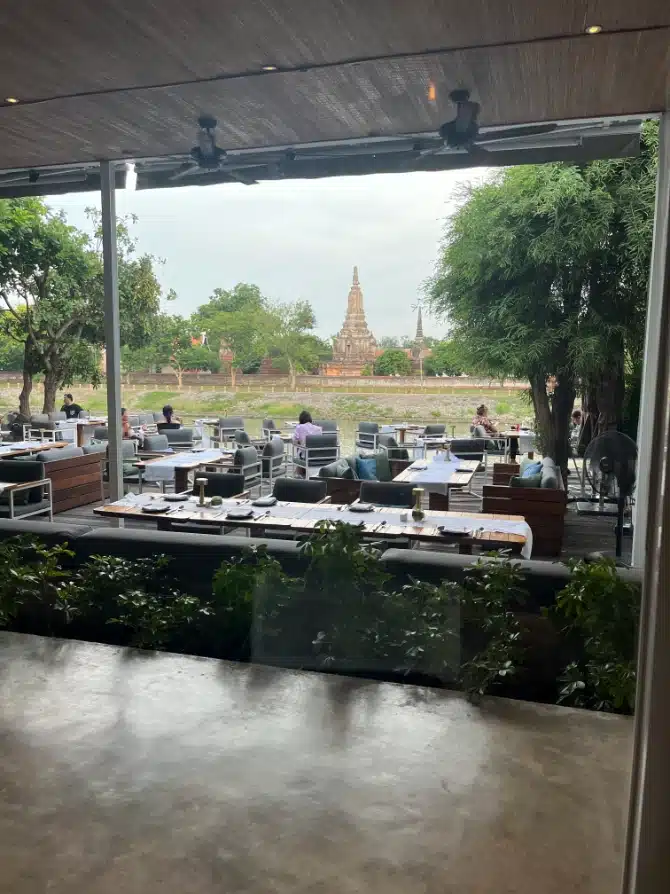
Pause during the hottest hours for an early lunch. A riverside restaurant north or east of the island works well, you’ll find local spots with shaded verandas and good views of the water. It’s a practical time to recharge before continuing.
Baan Hollanda (Dutch Museum)
Suggested time: 14:00 to 14:45
In the afternoon, begin at Baan Hollanda on the southern riverbank, once the Dutch East India Company’s lodge. The modern museum (closed Mondays) explains Ayutthaya’s role in global trade networks, with exhibits on deer hides, sappanwood, and European links. Outside, you can see the footprint of the old warehouses. It’s compact, informative, and rarely busy.
Japanese Village
Suggested time: 15:00 to 15:45
Cross to the east bank of the island for the Ayutthaya Japanese Village. Here you’ll find a landscaped Japanese garden, a carp pond, and exhibits on the Japanese community of traders and samurai, including Yamada Nagamasa. It’s a calm, reflective stop that illustrates Ayutthaya’s international connections beyond Europe.
Wat Kudidao
Suggested time: 16:00 to 16:30
Hidden in a quiet neighborhood east of the city, Wat Kudidao is an atmospheric ruin rarely visited. A fallen prang, ivy-clad walls, and an ubosot with a tree growing through its roof create dramatic scenes. Stucco flowers still cling to the walls, and the afternoon light makes the ruins especially photogenic. You’ll likely have it to yourself, aside from the occasional local cyclist.
Sunset at Wat Chaiwatthanaram or St. Joseph’s Church
Suggested time: 17:15 to sunset
End the day with a contemplative sunset. For grandeur, return to Wat Chaiwatthanaram on the west bank, its Khmer-style chedis glow beautifully in evening light. For a quieter close, visit St. Joseph’s Church, founded by French missionaries in 1666. Painted butter-yellow, it shines in the low sun, with peaceful riverbank views of the island’s chedis in silhouette. Either way, it’s a fitting finale to a day of hidden gems.
Who this suits: Visitors who enjoy slow travel, local stories and sites where there is space to sit and think without crowds.
Hidden Gems Itinerary Google Map
Final tip: you can always combine part of this hidden gems route with the main one day itinerary if you want one or two quieter stops without giving up the classic highlights.